
Municipal Water Surveying Prices 2026: What You Need to Know About Costs in Pretoria, East, North, West, Centurion & Tshwane
The cost of Municipal Water Surveying Prices can be as high as a small car. This guide covers water surveying prices in South Africa for 2026. We’ll explore costs across provinces and major cities.
Water surveying prices in South Africa range from R50,000 to R100,000. The cost depends on location and project scope. Basic surveys start at R600 per metre.
A 40-60 metre survey costs about R24,000. Advanced geophysical surveys can add R15,000 to R30,000 to the total cost.
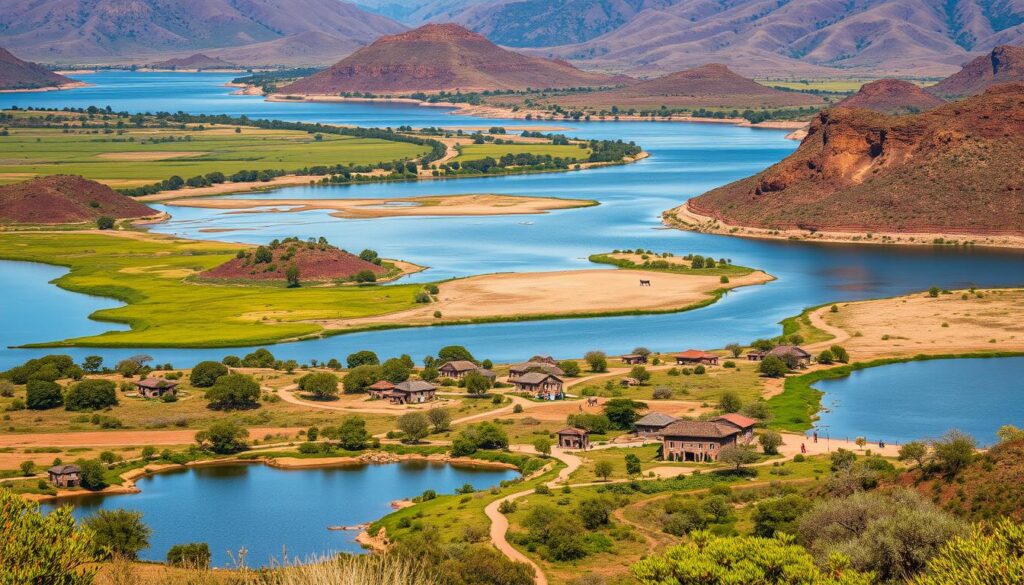
Water scarcity in South Africa makes accurate surveys crucial. They help locate water sources and ensure sustainable use. The revised Pricing Strategy for Raw Water Use Charges starts in April 2026.
We’ll look at city-specific water survey fees across South Africa. This includes Johannesburg, Cape Town, Durban, and Port Elizabeth. We’ll also cover provincial water survey pricing.
This guide is for homeowners, developers, and municipalities. It will help you understand municipal water surveying prices in South Africa – Contact Us
Municipal Water Surveying Prices: Understanding the South African Water Survey Landscape
South Africa’s water resources face unique challenges due to its semi-arid climate. Professional water surveying is vital for managing our scarce water supplies. Uneven rainfall distribution adds to the nation’s water scarcity issues.
Current State of Water Resources
South African water resources are under significant strain. Our average rainfall of 450mm falls well below the global average. This leads to low stream flows and challenges for remote industrial developments.
To manage these scarce resources effectively, the country is divided into 19 water management areas.
Importance of Professional Surveying
Professional water surveying ensures accurate assessments of water availability and quality. It guides sustainable use and development of our limited water supplies. Surveys help identify ideal drilling spots, reducing risks by up to 97%.
Typically, surveying costs about 5% of total drilling expenses.
Regulatory Framework and Compliance
The National Water Act of 1998 governs water regulations in South Africa. It focuses on efficiency, sustainability, and fair access to water resources. Compliance is essential for all water-related projects.
This includes obtaining necessary permits for drilling and water use.
| Survey Type | Accuracy | Depth Capability | Cost Range |
|---|---|---|---|
| Basic Ground Survey | 70-75% | Up to 50m | R20,000 – R30,000 |
| Advanced 3D Survey | 85-90% | Up to 200m | R50,000 – R75,000 |
| Geophysical Survey | 90-95% | Up to 500m | R150,000 – R500,000 |
Professional surveying and adherence to regulations are key to sustainable water use. Awareness of our water scarcity situation is crucial for effective management. These factors are important across all sectors in South Africa.
Municipal Water Surveying Prices Across Major Cities
Water surveying costs in South Africa vary across major cities. Our research reveals trends in pricing structures and influencing factors. These insights can help plan for water surveys effectively.
Johannesburg and Pretoria Rates
Johannesburg water survey costs range from R50,000 to R75,000. This is for a standard 90-metre borehole inspection. Pretoria follows a similar pricing structure due to shared geological conditions.
Cape Town and Western Cape Pricing
Cape Town water surveying prices are higher, between R40,000 and R80,000. This increase stems from complex water management challenges. Stricter regulatory requirements also play a role.
Durban and KwaZulu-Natal Costs
Durban water survey rates are lower, typically ranging from R25,000 to R75,000. This broad range reflects KwaZulu-Natal’s diverse geographical features. Coastal areas and inland regions contribute to the price variation.
Port Elizabeth and Eastern Cape Fees
Port Elizabeth water survey fees fall between R30,000 and R70,000. The Eastern Cape’s unique water resource challenges influence these rates. Varying terrain also affects the pricing structure.
| City/Region | Price Range | Average Cost |
|---|---|---|
| Johannesburg/Pretoria | R50,000 – R75,000 | R62,500 |
| Cape Town/Western Cape | R40,000 – R80,000 | R60,000 |
| Durban/KwaZulu-Natal | R25,000 – R75,000 | R50,000 |
| Port Elizabeth/Eastern Cape | R30,000 – R70,000 | R50,000 |
These price variations reflect local geological conditions and accessibility. Market factors unique to each region also play a role. Most cities issue monthly water bills with late fees.
The average late fee is R12.05 with a 4.6% interest rate. Cities are adopting asset management systems for better service delivery. This aligns with broader water management patterns across South Africa.
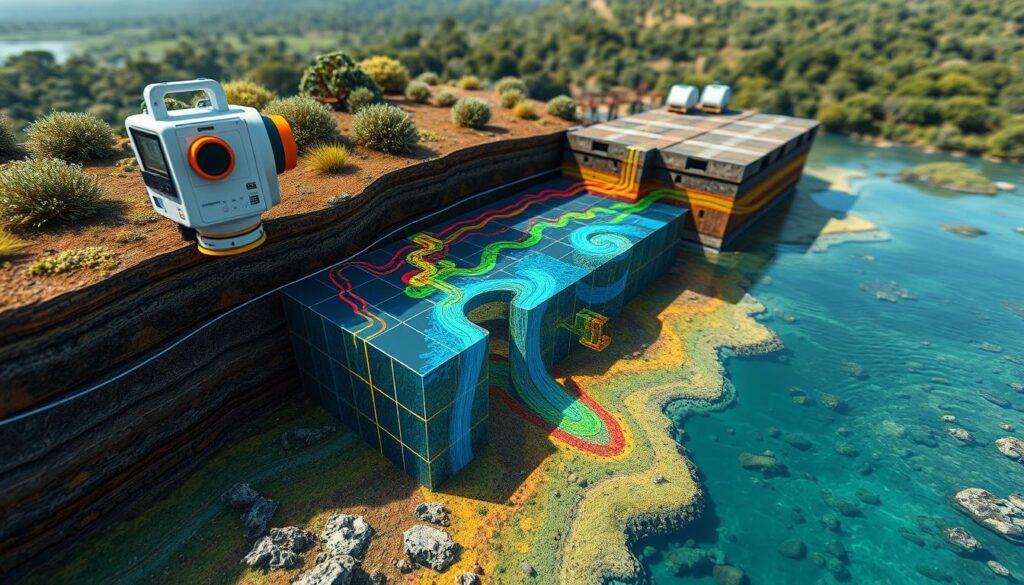
Understanding these cost structures is crucial for residents and businesses. It helps in planning water surveys and managing water-related expenses effectively. These insights can lead to better water resource management decisions.
Advanced Survey Technologies and Their Impact on Pricing – Municipal Water Surveying Prices
Water surveying in South Africa has undergone a remarkable transformation. Geophysical techniques now offer unparalleled accuracy in locating water resources. However, these cutting-edge methods come with a higher price tag.
Ground penetrating radar is a true game-changer. It provides detailed underground imaging with 85-90% accuracy. Electrical resistivity tomography goes further, mapping subterranean water bodies in intricate detail.
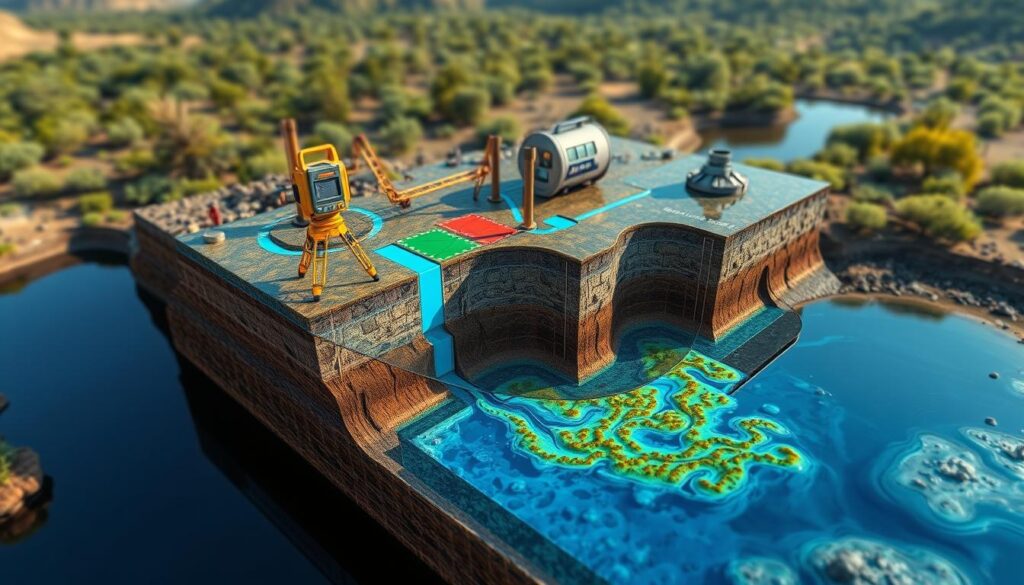
Seismic refraction methods excel at mapping deep aquifers, despite their higher cost. 3D water surveys offer a comprehensive view of underground water. Their superior results often justify the increased expense.
| Survey Method | Accuracy | Depth Range | Cost Range |
|---|---|---|---|
| Basic Ground Survey | 70-75% | Up to 50m | R24,000 – R30,000 |
| Advanced 3D Survey | 85-90% | Up to 200m | R50,000 – R75,000 |
| Geophysical Survey | 90-95% | Up to 500m | R150,000 – R500,000 |
Advanced technologies increase initial survey costs but often lead to more reliable outcomes. A successful survey can significantly boost property value. It can also yield substantial long-term savings on water expenses.
Cost Components and Pricing Structures – Municipal Water Surveying Prices
Grasping water survey costs is vital for municipal water management planning. We’ve examined the elements that make up the overall expense of water surveys in South Africa.
Basic Survey Cost Breakdown
The core of any water survey includes its basic components. In South Africa, these expenses can differ greatly based on location and project scope.
| Survey Type | Cost Range | Notes |
|---|---|---|
| Initial Survey | R5,000 – R10,000 | Typical for Polokwane area |
| Desktop Study | R2,000 – R5,000 | Water detection analysis |
| Comprehensive Geophysical Survey | R5,000 – R15,000 | 85%-90% accuracy in urban areas |
Professional Labour Charges
Labour charges make up a large part of the total water survey cost. These fees cover the expertise of skilled professionals who conduct the surveys.
- Installation labour: R2,000 – R5,000
- Professional fees: Up to 0.0015% of project value
Equipment and Technology Fees
Advanced equipment ensures accurate survey results. The fees can vary based on the complexity of the technology used.
| Equipment/Technology | Cost Range |
|---|---|
| Advanced Geophysical Equipment | R800,000 – R3,000,000 |
| Electrical Resistivity Tomography (ERT) | R15,000 – R30,000 |
| Magnetic Survey Equipment | R10,000 – R20,000 |
Additional Service Costs
Several extra services add to the overall water survey expenses. These can include various testing and installation processes.
- Water quality testing: R1,500 – R3,000
- Pump installation: R5,000 – R25,000
- Annual maintenance: R1,000 – R2,500
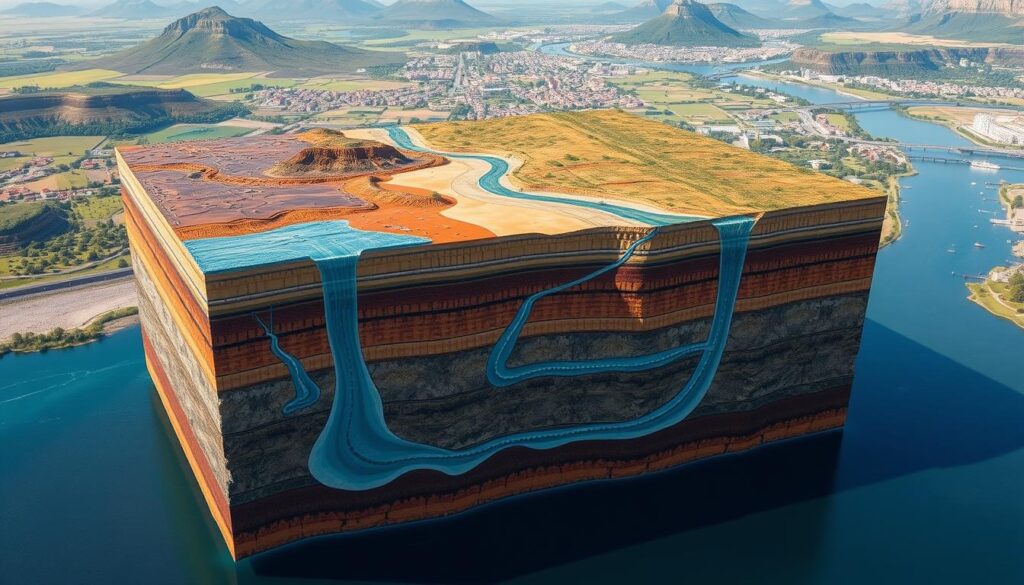
Understanding these cost components helps municipalities plan better. They can budget for thorough water surveys, ensuring efficient water management across South Africa.
Regional Variations in Survey Costs – Municipal Water Surveying Prices
South Africa’s water surveying costs vary greatly across provinces and between urban and rural areas. These differences arise from diverse geological conditions and local market forces. Understanding these variations is crucial for accurate budgeting.
Provincial Price Differences
Water survey costs differ significantly between provinces. In Gauteng, a 90-metre borehole inspection costs between R50,000 and R75,000. The Eastern Cape’s prices range from R30,000 to R70,000 for 70-100 metre surveys.
KwaZulu-Natal’s costs for similar depths span R25,000 to R75,000. North West Province sees higher prices, ranging from R60,000 to R120,000 for 90-110 metre surveys.
| Province | Survey Depth (metres) | Price Range |
|---|---|---|
| Gauteng | 90 | R50,000 – R75,000 |
| Eastern Cape | 70-100 | R30,000 – R70,000 |
| KwaZulu-Natal | 80-100 | R25,000 – R75,000 |
| North West | 90-110 | R60,000 – R120,000 |
| Limpopo | Varies | R600 – R1,000 per metre |
Urban vs Rural Survey Costs
Urban water survey prices usually exceed rural rates. In Johannesburg and Pretoria, a 90-metre borehole inspection costs R50,000 to R75,000. Cape Town’s rates range from R40,000 to R80,000.
Rural areas often have lower prices. This is due to reduced demand and lower operational costs in these regions.
Geological Impact on Pricing
Geology plays a crucial role in determining water survey costs. Challenging terrains require sophisticated equipment and expertise, increasing survey expenses. Complex rock formations might need advanced techniques like Ground Penetrating Radar.
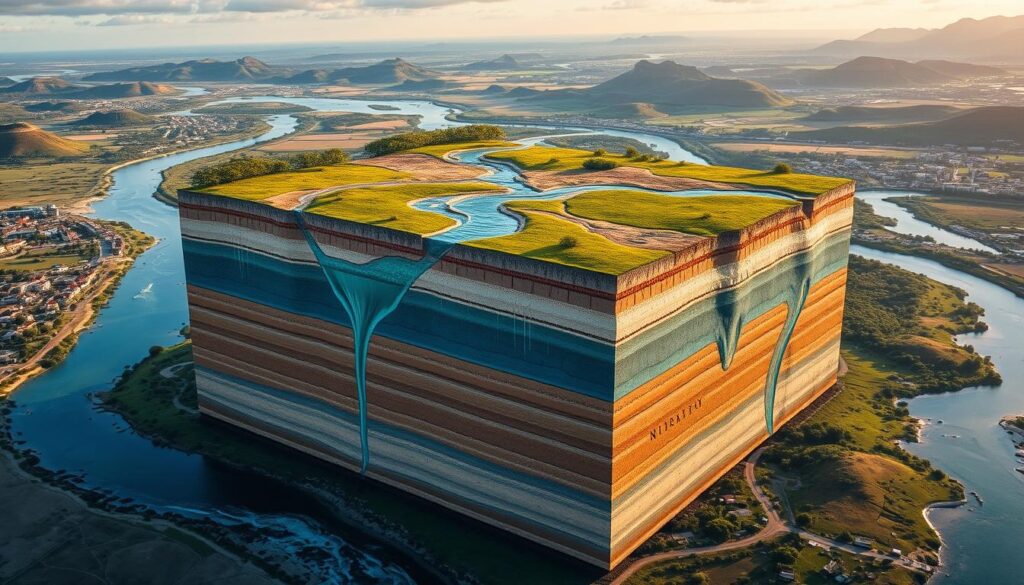
These methods can potentially double the survey cost. Knowing these regional differences helps in planning for water surveys across South Africa.
Professional Certifications and Quality Assurance – Municipal Water Surveying Prices
Water surveyor qualifications are vital for accurate and reliable water surveys in South Africa. The Geomatics Professions Act and Land Survey Act govern professional standards. These regulations ensure quality assurance in water surveying.
Becoming a certified water surveyor requires significant investment in education and training. The entry-level cost is about R600,000. This covers academic qualifications like a Bachelor’s degree, B Tech, or diploma in surveying.
Only Professional Land Surveyors can legally conduct boundary surveys. Engineering Surveyors need a B Tech or N Dip in Surveying. These certifications ensure professionals have the necessary skills for accurate surveys.
Quality assurance also requires practical experience. Engineering Surveyors must complete three years of approved practical training. This hands-on experience is crucial for developing professional surveying skills.
Proper certifications are reflected in survey costs. Certified professionals may charge more, but their expertise ensures reliable results. Survey fees typically account for 0.0015% of the total project value.
- Basic survey equipment and software costs around R800,000
- Advanced setups can cost up to R3,000,000
- Water surveys can increase property values by up to 15%
- Accuracy rates for advanced surveying methods are between 85% and 90%
Rigorous standards and proper certifications ensure high-quality results in water surveying. This contributes to the sustainable management of South Africa’s water resources.
Municipal Water Surveying Prices: Conclusion
Water surveying in South Africa faces significant challenges. Johannesburg’s water usage has increased by 11% over five years. Daily consumption has reached 279 litres per person, far exceeding the global average.
Water survey costs vary widely across South Africa. Basic residential assessments start from R2,500. Comprehensive hydrogeological studies can cost up to R50,000.
These figures highlight the importance of water survey investments. They help maintain infrastructure and prevent losses. In Johannesburg, 26% of treated municipal water is lost to leaks.
Future water survey trends point towards advanced technologies. These may add R5,000 to R10,000 to survey costs. However, they offer superior accuracy and efficiency.
Professional surveys will play a crucial role in South Africa’s water future. They will help shape sustainable water resource management practices.
FAQ
1. What is the typical price range for water surveying in South Africa in 2026?
Water surveying prices in South Africa for 2026 typically range from R50,000 to R100,000. These prices can vary based on location and project scope.
2. How much does a basic water survey cost per metre?
Basic surveys start at about R600 per metre. A 40-60 metre survey would cost around R24,000.
3. What additional costs might be involved in a water survey?
Advanced geophysical surveys can add R15,000 to R30,000 to the total cost. Steel casing costs about R3,000 for 6 metres.
Water quality testing ranges from R1,500 to R3,000. Annual maintenance can cost between R1,500 and R10,000.
4. How do water surveying prices vary across major South African cities?
Prices vary significantly across cities. In Johannesburg and Pretoria, a 90-metre borehole inspection costs R50,000 to R75,000.
Cape Town and Western Cape prices are higher, ranging from R40,000 to R80,000. Durban and KwaZulu-Natal rates are slightly lower at R25,000 to R75,000.
Port Elizabeth and Eastern Cape prices range from R30,000 to R70,000.
5. What factors influence the cost of water surveying in South Africa?
Several factors affect water surveying costs. These include location, geological conditions, project scope, technology used, and surveying team expertise.
Urban areas generally have higher rates than rural regions. This is due to accessibility and demand.
6. What types of advanced technologies are used in water surveying?
We use Ground Penetrating Radar (GPR) and Electrical Resistivity Tomography (ERT). These techniques offer 85%-90% accuracy in identifying water sources.
3D water survey techniques provide comprehensive views of subterranean water bodies.
7. Are there any regulatory requirements for water surveyors in South Africa?
Yes, we follow the Geomatics Professions Act 19 of 2013 and the Land Survey Act 8 of 1997.
Professional Land Surveyors with surveying degrees can conduct boundary surveys. Engineering Surveyors with diplomas or B Tech degrees can perform engineering-related surveys.
8. Why is professional water surveying important in South Africa?
Professional water surveying is crucial due to South Africa’s semi-arid climate and water scarcity issues. The country’s average rainfall is 450mm, below the world average of 860mm.
Accurate surveying is essential for efficient water resource management and regulatory compliance.
9. How might water surveying prices change in the future?
As technology advances and regulations evolve, the water surveying industry will likely grow and innovate. This could lead to more efficient surveying methods, potentially affecting future pricing structures.
10. What’s the typical cost range for water surveying equipment?
Equipment and technology costs can range from R800,000 to R3,000,000. This significant investment reflects the sophisticated nature of modern water surveying techniques.

